(An Autonomous Institution)
(Approved by AICTE, Affiliated to Anna University & Accredited by NAAC)
(Recognised by UGC under section 2(f) &12(B) of the UGC Act,1956.)
Accredited by the National Board of Accreditation - NBA (CSE, ECE, EEE)
Established in 2001, the Department of Computer Science & Engineering at Mount Zion College of Engineering and Technology is committed to developing competent technocrats and skilled software professionals, accredited by the National Board of Accreditation (NBA).
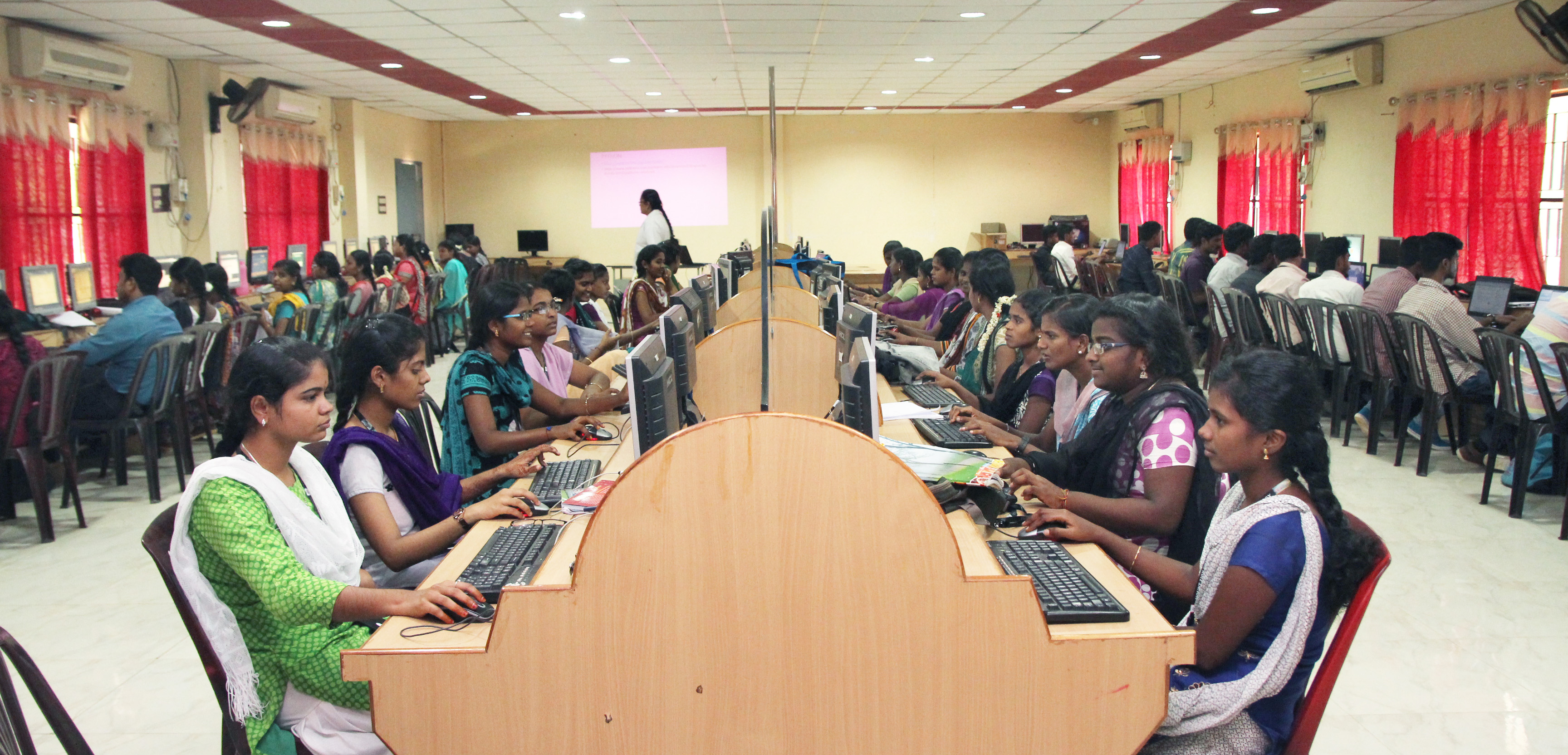
The department is supported by experienced and dedicated faculty with strong academic and research backgrounds. It provides well-equipped laboratories including advanced programming, networking, and project development facilities.
The department houses an e-Yantra Lab sponsored by MHRD, promoting robotics and embedded systems learning, along with dedicated project laboratories supporting innovative student projects and research activities.
Funded projects undertaken by the department are supported by various government agencies covering domains such as artificial intelligence, IoT, smart systems, and software development β fostering research, innovation, and real-time problem-solving skills.
The department regularly conducts 24-hour hackathons, workshops, value-added courses, and intensive boot camps in emerging technologies to enhance students' technical expertise and industry readiness.
The department has achieved notable success through consistent academic performance, university ranks, active participation in technical events, and research publications β preparing students to meet global technological challenges.
To be a leader in Computer Science & Engineering education by empowering students with the knowledge, skills, and values needed to excel in technology, innovation, research, and societal service. We aspire to create graduates who are not just technically proficient but also ethical leaders capable of contributing meaningfully to society.
To provide a robust foundational curriculum in computer science and engineering principles. To promote innovation, creativity, and research aptitude through cutting-edge laboratories and industry partnerships. To nurture leadership qualities, professional ethics, and social responsibility in our students. To forge strong collaborations with industry and academia for knowledge exchange and career opportunities.
Our PEOs define the expected accomplishments of graduates within a few years after graduation.
Graduates will excel in their careers by applying technical expertise, problem-solving skills, and a commitment to lifelong learning to address challenges in computer science and engineering.
Graduates will demonstrate leadership, teamwork, and ethical values in their professional roles, contributing to the success of organizations and the betterment of society.
Graduates will develop innovative, sustainable, and socially responsible solutions using their knowledge of computer science and engineering to address real-world challenges and advance technology.
Specific skills and knowledge that graduates of the CSE programme are expected to attain.
Apply the principles of computer science and engineering to design, develop, and analyze software systems, utilizing programming languages, algorithms, and computing platforms effectively to solve real-world problems.
Innovate and apply cutting-edge technologies such as artificial intelligence, machine learning, and data science to tackle complex, interdisciplinary problems, enhancing system efficiency and functionality.
Demonstrate strong professional communication, teamwork, and ethical decision-making skills, enabling them to work effectively in collaborative environments and contribute responsibly.
Comprehensive outcomes that describe what students are expected to know and be able to do by the time of graduation.
Apply the knowledge of mathematics, science, engineering fundamentals, and an engineering specialization to the solution of complex engineering problems.
Identify, formulation, review research literature, and analyze complex engineering problems reaching substantiated conclusions using first principles of mathematics, natural sciences, and engineering sciences.
Design solutions for complex engineering problems and design system components or processes that meet the specified needs with appropriate consideration for public health, safety, cultural, societal, and environmental considerations.
Use research-based knowledge and research methods including design of experiments, analysis and interpretation of data, and synthesis of the information to provide valid conclusions.
Create, select, and apply appropriate techniques, resources, and modern engineering and IT tools including prediction and modeling to complex engineering activities with an understanding of the limitations.
Apply reasoning informed by the contextual knowledge to assess societal, health, safety, legal and cultural issues and the consequent responsibilities relevant to the professional engineering practice.
Understand the impact of the professional engineering solutions in societal and environmental contexts, and demonstrate the knowledge of, and need for sustainable development.
Apply ethical principles and commit to professional ethics and responsibilities and norms of the engineering practice.
Function effectively as an individual, and as a member or leader in diverse teams, and in multidisciplinary settings.
Communicate effectively on complex engineering activities with the engineering community and with society at large, being able to comprehend and write effective reports and design documentation.
Demonstrate knowledge and understanding of the engineering and management principles and apply these to one's own work, as a member and leader in a team, to manage projects in multidisciplinary environments.
Recognize the need for, and have the preparation and ability to engage in independent and life-long learning in the broadest context of technological change.
We offer comprehensive undergraduate and postgraduate programs designed to meet the evolving needs of the IT industry.
B.E.Computer Science & Engineering
M.E.Computer Science & Engineering
Explore our key departmental events, workshops, and achievements for the current academic year 2025-2026.
Recognizing the academic excellence, technical prowess, and outstanding accomplishments of our students across various platforms and competitions.
| S.No | Name of Student | Batch | Achievement | Details of Achievement | Year |
|---|
Explore our distinguished faculty members, their achievements, and research contributions.
Our students consistently excel in academics, securing top ranks in university examinations.
We facilitate quality industrial training and internships to bridge the gap between academics and industry.